Showing posts with label Value Buying. Show all posts

Saturday, June 6, 2015

The Builder's Beauty Contest


Editors Note: My very talented friend and designer Courtney Price asked me to write this piece for her lifestyle blog, CourtneyPrice.com after hearing of "The Builder's Beauty Contest" from her client who had read my book, Un-HINGED - A Homebuilder's Secrets for Saving Time and Money. I asked if I could borrow it back for inclusion in Build Your Nest. 

The Builder’s Beauty Contest

Thinking about building or remodeling? Don't be fooled by the Builder's Beauty Contest, protect yourself with these tools on www.CourtneyPrice.com

Reality check: Beware of the lowest bid…

For many people, the home is the biggest investment. When building one’s dream home or remodeling an existing house, one can easily get caught in the snare of the numbers game with multiple bids.  Misleading contractors have been known to say or do whatever it takes to get the job, encumbering the homeowner with devastating financial consequences. To discuss this topic and offer guidance, I have invited a highly respected Dallas contractor with a strong moral compass and decades of experience to decode the bidding wars in this special guest post.  Bob Hoebeke is all about communication with his clients; his honesty and transparency have built a solid base of repeat clients with stunning homes. Please welcome Bob:
Do you hear that angry, snarling, gnashing of teeth behind you in the Starbuck’s line while you’re ordering your “quad Venti, no whip, cinnamon dulce latte?” It could very well be the sound of an angry homeowner who has invested inordinate amounts of time, energy and money in building or remodeling their home only to have their dreams shattered through financial mismanagement, deceit, gross incompetence, cover-up or just plain stupidity on the part of their builder. Unfortunately, even for the wealthiest of homeowners, there are no do-overs.
More often than not the scenario described above happens because of the “Builder’s Beauty Contest.” Well-intentioned architects, seeking the best pricing for your home, submit plans to multiple builders. The age-old myth embraced by many is, more bidders means more competition, and more competition means a lower project price. But the reality is substantially different.
planning to build or remodel? read about the  Builders Beauty Contest first on www.CourtneyPrice.com
With stiff competition and the desire to secure the work, each builder will competitively price what they see as the parts and pieces of the project and begin to shape a budget story they believe the architect and owner will want to hear. But there are thousands of pieces to a building or remodeling project. As the builder bids, some pieces will be missed, others will be substituted, many will be camouflaged in other cost centers (site work, landscaping, interior furnishings and after market finishes etc.), and still others will be allowanced with expense caps so low they become meaningless (you can’t buy much of a potty for $50). Builders have to win so many will lie, cheat and even steal for a signed contract. Herein lies the problem.
know what you are getting into before you build or remodel your dream home on www.CourtneyPrice.com
Since final results of a competitive bid bear little resemblance to what actual costs will be when the project is completed, more often than not the awarding of the contract goes to who can tell the best story. Usually the prettiest story wins – it’s The Builder’s Beauty Contest!

 Several ways to help you avoid The Builder’s Beauty Contest:

  • Interviewing multiple builders and hiring integrity and chemistry:
    • On a material to material, and labor to labor basis, there won’t be much difference between builders if they are bidding like quantity, so hire who you like and work together on price.
    • Evaluate a builder’s project administration plan and review cost control mechanisms as well as the builder’s communication skills.
  • Ask for, and check references:
    • Who were the builder’s last five clients and what are they saying about your candidate?
    • How long has the builder employed his trades or subcontractors? Frequent line-up changes often point to instability.
    • Ask for supplier references (lumber, concrete, plumbing, flooring, cabinets, etc.) and find out if he’s paying his bills on time.
  • See some of his work – both finished, and under construction:
    • Are all the parts and pieces there? Do joints fit tightly? Are things well thought out?
    • Do the finishes meet your expectations?
    • Is the job under construction neat, organized, and clean?
  • Smart builders will competitively bid only commodities (lumber,sheetrock, fixtures, etc.) :
    • New, and unfamiliar labor means training and mistakes. A smart builder will not want someone they don’t know “practicing” on your home.
    • Basic safety rules – why take a chance on putting unfamiliar labor in the same home with a client when unsure of the laborer’s past?
Don’t get sold a bill of goods. Let all the poising, primping, and posturing associated with the Builder’s Beauty Contest be saved for someone else’s project. Make a great decision and have yourself some fun as you build the home of your dreams-
-Bob Hoebeke
Unhinged, your manual for remodels or new builds - on www.CourtneyPrice.comOur guest contributor is a published author with a must-read book for anybody who is building or remodeling. The Builder’s Beauty Contest is included in this book but there is so much more. Unhinged is an organizational tool that places you in the center of the process along with your contractor and design team, rather than being managed by your contractor. See more about and order your copy of Unhinged here.
Hoebeke Builders Dallas TX on courtneyprice.com
For the tech savvy- Bob Hoebeke has also created an APP: BuildCHX – check it out if: 1) you plan to build or remodel 2) you are a designer 3) you want to make sense of the giant jigsaw puzzle of the custom construction process 4) you want to keep your new-build or remodel on time and within budget.  BuildCHX offers a linear chronological sequence that will prevent the common delays associated with selections. We all know how costly delays are – this app keeps you a step ahead at all times.
Want more? Bob has a blog… full of sage pointers, observations, advice, a link to project photos- great content.
If you found this article useful, please recommend it and share it with your friends.

Wednesday, February 19, 2014

Gotcha...


The old saying goes, "you don't know what you don't know." So when you're building that home of your dreams, or remodeling the one you love, how do you know what you don't know? It's a fair question. In today's highly competitive housing market how do you know you're getting what you paid for when half the stuff you are paying for is covered up?


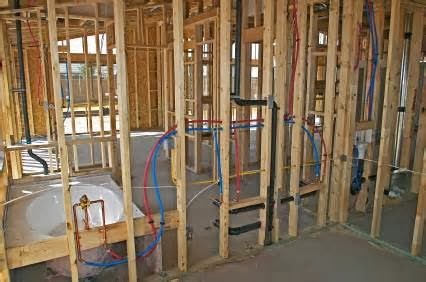
Substantiated rumors are floating around town that builders are using apartment grade plumbing on million dollar homes. But how is the consumer supposed to know about the quality of the pipes being installed behind the walls? When your water lines are decomposing or being eaten by bugs five years down the road its really too late to start questioning the integrity of what your builder is using on your job! And trust me, it happens everyday...


"Specifications don't mean anything in residential construction anymore," groaned one lumberyard vendor recently. Architects may draw it, and structural engineers may specify the materials necessary to make it strong, but some builders are changing lumber grades, product spacing and materials to cheapen costs and improve profit margins. No single construction item is more prone to homeowner deception than lumber. Why? Because ultimately everything is covered up! "Builder are wanting to get through their warranty period (with a homeowner) and that's it - period!" With the abundance of products available to a builder, changing the grading stamp on a ceiling joist, varying the distance between framing members, or even swapping out a specified plywood for OSB (oriented strand board) can make as much as a 10% cost difference in the cost of a framing package. And 10% of the cost of the single largest commodity going in your home can mean thousands of dollars in the builder's pocket!!


On a shorter leash you may not know that the $7,500 allowance your builder gave you for plumbing fixtures needed in your million dollar home will barely do the Master Bath. But you'll figure it out when you go to Ferguson Enterprises to select fixtures for the whole house and spend $25,000! By then the ink will be dry on the contract and it's too late to renegotiate. Can you spell "cost overrun?"

In tight economic times where way too many builders are competing for way too few projects, many believe the name of the game is 'get the contract signed, and make it up on change orders.' Builders feel they can deal with the fallout later. After all, who doesn't build a house understanding that there will be some cost overruns?!!


Recently we were hired to review the specifications for a couple's "dream home" after some problems arose between their builder and the bank. Budgets seemed low, and parts were definitely missing. To be safe we had our guys bid the work. Our estimate was 82% higher than the couple's builder, who, it turns out, had just declared bankruptcy! Forget the dream home, the couple purchased a nice pre-owned and have settled in comfortably.

Sensationalism you say...maybe until it's your project, but then it has a way of becoming all too real.

Disasters such as these can be avoided. Consider these tips before you build or remodel your next home:

  • Build a team of professionals (architect, builder, interior designer, and landscape architect) and empower them with the specific scope of work required. Part of that scope of work needs to be a realistic budget.
  • Challenge the team to not only work with the parameters you've outlined, but also "value engineer" where possible to produce the same product for less money.
  • Demand total accountability and absolute transparency by requiring weekly reports detailing each team member's progress. This type of communication ensures that everyone associated with your project is singing off the same sheet of music.
For more practical tips, pick  up a copy of my book, UnHinged - A Homebuilder's Secrets for Saving Time & Money (Amazon), and my app, BuildCHX (iTunes or Google Play).

Tuesday, October 16, 2012

Puzzle Masters - The Builders

(Editors Note: The following is an excerpt from my new book Raising the Roof! A Homebuilder's Secrets to Saving Time and Money. So often homeowners take a "Ready, Fire, Aim" approach to the building process. Raising the Roof! attempts to re-orient the process so most of the planning occurs upfront, before leaving the architect's office. This piece is a snippet from the section dealing with the second of the Team Members, the builder. Many additional "tricks and tips" can be gleaned from the balance of the text, but you'll just have to wait for the book to be published before you can see the rest of what we're up to!) 


Puzzle Masters – The Builders
On one hand you have architects that specialize in design but don’t know cost. The other hand consists of the contractor/builder who doesn’t know design but lives in the world of cost everyday. Sounds like a marriage made in heaven doesn’t it? Wrong. Seemingly architects always want to be on the budget and production committees, and builders want to sneak over to the design committee. The problem? Each is convinced they know more about the other’s discipline. The truth? Architects need only to design – and stay away from cost issues; builders need to specialize in the cost and technique of putting puzzle pieces together, and stay out of the design.

Let’s sort this out. But before we do, let’s clean up the difference between a “builder,” and a “contractor.”  Though the terms seem interchangeable, and will be used interchangeably in this book, a “builder” is someone who builds things and accepts all the normal risks inherent of the building business and also accepts the economic risks of being able to sell, or not sell their product in the marketplace. A “contractor” builds things for clients, still shouldering the normal risks of the building business, but works on a “for hire” basis, thus eliminating  most economic risk. Whew…is all of that clear as mud? If we go way back to the beginning of this book, the builder is the “businessman,” and the contractor is the “artist.”

By the very definition of their job description a builder/contractor has to be in cost and budget everyday. (Note: the title “Contractor” is derived from the word “contract” which everyone knows means lawyers and money must be involved). Whether building for a specific client or the open market, it’s impossible to build something without incurring cost. So, with pricing fresh in their mind, the Contractor is much more likely to know the cost of a pier and beam foundation then the pencil pushing architect.

But ignorance doesn’t stop the architect from guessing. Almost every day in Dallas, Texas you have an architect guessing how much it’s going to cost to build the magnificent structure he/she has just designed. They’re clueless! (Qualifier: unless the firm is “design/build” where architecture and construction both come out of the same office – see the section on Architects). Some of the hardest deals ever done are projects where the client has hired the architect independent of the contractor, designed a magnificent home with the architect, and been told it can be built for say $175 per square foot (exclusive of land). Just imagine the surprise of the client, and the embarrassment to the architect when the project prices out at $300 per square foot. ARCHITECTS DON’T KNOW COST – they think they do, but don’t let ‘em fool ya.

Earlier, in defining the difference between builders and contractors, the rather unusual and precarious risks faced by builders everyday were noted.  Any occupation where people are putting large objects together; standing on walk boards two stories in the air; installing roofing on slopes too steep to possibly walk; and playing with methane gas, to name just a few potential dangers, has inordinate amounts of risk. Assembling the large pieces necessary to build a home requires hanging in mid-air on scaffolding (usually walk boards to the framers), and nailing shingles on a steeply pitched roof while plumbers connect methane gas lines throughout the structure. The chemicals used in painting have yet to even be considered.

A natural argument says builders must be nuts to want to build houses. Some   are – “nuts” about the people, “nuts” about the process, and “nuts” about the finished product. Building gets in the blood and just won’t go away. Sure, risks can be managed through incorporating a business and buying all kinds of insurance but my Father-in-law said it best “…if you’re going to build big houses, you’re going to have big problems.” Truer words have never been spoken.

Builders wish the risks and liabilities were limited to only jobsite related functions. No way - those risks are too manageable. Add economic risks, downturns in the economy, international trade regulation risks, raw product price spikes (copper and gypsum are two prime examples), shortages, client management and relations risks, even the threat of litigation, and it makes one wonder why anybody would sign up for being a builder. (I once had a client that was soooo mad they said their attorney was ‘going to sue me until I bled to death!’)

What’s the incentive in begging for this kind of potential punishment? Where else can a person literally conceive an idea one day, start building on it the next, and end up with something becoming a legacy when long gone? Fourteen months in the oil and gas business years ago filing files taught me about missing the spontaneity of the homebuilding business….. (probably didn’t make near the money, but I’ve had a much better time).


Thursday, April 26, 2012

'To Bid, or Not To Bid...'

That is the question. Everyone wants the best deal they can possibly get - I understand that. But maybe the "best deal" doesn't really involve price. Maybe the best deal involves those intangibles like "well built,"  "cleverly value engineered," or "beautifully detailed."


Let me just go ahead and say it: a competitive bid format for project pricing on a residential project is not in the best interests of the client! Here's why. The bid becomes a "story." All bidders wonder what story the client wants to hear - after all, we all want the work! But the story almost always bears little resemblance to what the project ends up costing, or looking like. Why? Because the client lives in the home represented by the story. This isn't a commercial structure we're talking about here that absolutely has to be built for the lowest possible dollar. This is a home that invariably has "creature comforts" that creep back into the building process! Those creature comforts usually cost more that the original bid projections.


Because competitive bidders all want to win the business, sometimes they cut corners to bring their overall budget in under their competition. Clearly this is not in the best interests of either the Architect or the Homeowner! Below are some examples taken from a remodel we currently have under construction - inadequate materials used and then covered up for us to find twenty years after the initial construction. 


No air duct? No Problem! The Builder decided to have the joist space pretend to be the air duct! Ah.. can you spell Code Violation?
'Maybe if I just cut this flooring out I can get enough return air flow!'
Ignored, and undersized structural details cause....
THIS!!
So what is the best way to make sure that you get the best deal possible? Let's let thirty-four years of experience in the building business make some practical suggestions on how to insure you get the most for your money.

  1. Build a Team. It's your home, it's your project, so you get to be the quarterback! Interview and hire integrity, character, experience, knowledge and a "can do" spirit as you define the various disciplines necessary to achieve your goal of building or remodeling your home. For sure you will need an Architect, Contractor, Interior Designer (unless you have fabulous taste!), and maybe even a Landscape Architect.
  2. Demand a Well Coordinated Plan. The best talent in the world, even with the most sterling of intentions won't efficiently design and complete your project without a well coordinated plan! Efficiency is the key - you will save a lot of money by reducing the "fumble factor!"
  3. Facilitate Strong Communications. Information is power and really good information, well communicated, is really powerful! Is there a mechanism in place for strong communication between the various disciplines?
  4. Challenge the Team to Value Engineer. This is where you will really save the money and get your BEST DEAL! Almost always there is a different way to achieve the same look or feel for less money. Experience, coordination, and strong communications among the team will put money back in your pocket!
  5. Express your Gratitude. Team members really respond to a leader who is grateful for their efforts! You catch a whole lot more flys with honey than you do with vinegar!
But there is one other incidental benefit to following the above prescription: YOU WILL REALLY HAVE A GOOD TIME DOING IT!

Thursday, March 1, 2012

Miles of Smiles!

It's here! Dallas Blooms at the Arboretum in conjunction with "Small Houses of Great Artists!" (which you and I know from other blogs as the Kid's Playhouses!) is finished and ready for Kids! So how did the final result compare with the original Architect's design? You tell me...

"Monet" by Robbie Fusch
Photo courtesy of Bill Hurst Photography
Phillip McCloud and I had a wonderful time putting this project together! The Arboretum people could not have been nicer, or more gracious - they made our job much easier.

"Picasso" by Wilson Fuqua
Photo courtesy of Bill Hurst Photography
Of course the four Architects, Robbie Fusch, Wilson Fuqua, Clint Pearson, and Paul Turney turned each Great Artist's habitat into childhood whimsey!

"O'Keeffe" by Clint Pearson
Photo courtesy of Bill Hurst Photography
And our friend Mona Crider of La Foofaraw and her talented team really dressed the insides of our cottages.

"Seurat" by Paul Turney
Photo courtesy of Bill Hurst Photography
But our deepest gratitude goes to those vendors and subcontractors who wanted to see this project succeed and helped us out of a very tight budget and into all of this kid's splendor!

So how did Hoebeke Builders do at taking a two dimensional rendering, and making it come to life? Meet the Judges!

Wednesday, February 15, 2012

Possible Dreams!

Picasso - Photo courtesy of Bill Hurst Photography
In previous posts I have mentioned a whole host of people that have unselfishly given of their time, talents and resources to make "Small Houses of Great Artists" a reality out in the gardens of the Dallas Arboretum. When my business partner, Phillip McCloud - who has done the lion's share of the building, realized that we really  had way too much construction for either his driveway or the rented storage unit, Stan Goodell of Goodell properties in Celina stepped up with free warehouse space! Time and again our vendors and craftsmen (have I mentioned recently that we have the greatest vendors and craftsmen IN THE WORLD?) have come through with incredible products and efforts to help us build something really special for all the kids that visit the Arboretum!
Seurat's House - Courtesy of Bill Hurst Photography
Mona Crider and Company work their magic!

We are nearing completion now and our "thank you" to all who have helped make this possible seems woefully inadaquate! From the lumber yards that chipped in materials (Foxworth-Galbreath; Davis-Hawn Lumber; and Associated Truss); to those who have made it really special (Roof, Tile and Slate donated slate for Seurat House; Beach Sheetmetal donated the beautiful copper roof vent!; Lynn Watkins of Watkins Ornamental Ironworks created the steel support crown for Picasso; and Mona Crider and the talented artists of La Foofaraw that did the artwork), everyone has been so giving - and worked soooo hard! But it really shows.....


How could we forget the guys that came up with the designs in the first place? Robbie Fusch created Monet; Wilson Fuqua dreamed up Picasso; Paul Turney did Seurat; and Clint Pearson took on Georgia O'Keeffe! All marvelous - all extremely well built on a very, very limited budget. Which one's the BEST? You tell me!


Tuesday, November 15, 2011

Blessed? Or A Blessing?

With Thanksgiving right around the corner it's awfully tempting to reflect on the multitude of blessings that the Almighty showers down upon us! Last time I checked I was not forging through the City landfill looking for my next meal; we had plenty of hot water for this morning's shower (that right there puts us in the upper 1% of the WORLD!); we have a roof over our head, and we have  a comfortable bed in which to sleep! Sure, the building business is no where near what we want it to be, but through God's infinite grace we have yet to miss a meal. We are truly blessed!


But we also pause to remember those who are a "blessing" in our lives! That list from this boy's life is wwwwaaaaaaaaay to long to count, and even longer to try to enumerate here! Just last week another of God's "blessings" dropped right in our lap.


Dale Chihuly - "Through The Looking Glass"
As outlined in my post of October 20th (For the Kids!) my business partner Phillip McCloud and I committed to build four cottages for the Dallas Arboretum in conjunction with the Dale Chihuly Glass exhibit coming in May. The Arboretum accepted the designs of four of Dallas' most talented Architects - and now we have to get them built. Ahhhhh, that's on a very modest budget! Needless to say, when we started detailing the cottage design with each of the Architects, each wanted all the bells and whistles. Ahhhhh, that's on a very modest budget! Blessing #1: it appears that Foxworth Galbraith Lumber Company, our standard lumber supplier, may kick in the materials for at least one of the cottages! Two of the Architects have relationships with other lumber suppliers so we are hopeful on that score as well. But how do you build four "cottages" of approximately 225 square feet each with nothing more than a 10' x 20' mini-warehouse space?


Blessing #2: enter Stan Goodell! Phillip used his connections in Celina to find Stan, and he very graciously offered us a 2,400 square foot warehouse for the next 90 days - FREE!! Now THAT'S a BLESSING!! Suddenly we don't have to worry about weather; and we can field a crew (many hands make lite work)! You just have to admire those who step out of nowhere and want to help, giving of themselves unselfishly, and not caring about what's in it for them! Isn't that the very definition of a "blessing?"

Thursday, October 13, 2011

Meet Mary Poppins!

"Space, the Final Frontier!" Was that Dr. Spock of Star Trek fame that said that? Or were they referring to the housing market's trend towards "downsizing?" Regardless, with property taxes going up; energy costs skyrocketing; and 'the new conservatism' suggesting something other than massive square footage, people are becoming sensitive about doing more with less. Suddenly, for the first time in thirty-two years in business, people are asking for help in getting their homes organized. 


Enter Karyn Dismore of Design Concepts of Frisco, Texas. I call her "Mary Poppins" because with a tap of the umbrella, and a snap of her fingers, things just seem to find their place in your home. Her credo is "everything has it's place, and a place for everything!" A native of Zimbabwe, she even has that wonderful Mary Poppins accent! Clients love her for a lot of reasons, but her Mary Poppins bag of tricks continues to spew forth wonderful solutions for all of a home's dysfunction. Have I said that she is absolutely delightful while solving your problems?


Karyn and her husband Grant have become dear friends of ours. In fact, Molly and I are even the "grandparents" that their folks cannot be because they live so far away. No way can we possibly take the place of their real grandparents, but maybe we can be helpful when the girls have activities that require that certain elderly hug.  We love their girls! 


Several years ago when a client complained about how disorganized her house was (with four kids - ahhhhhh, no wonder!), I suggested that they talk with Karyn. Five years later she's still there, now working with the kids to try to keep things in their place! I'm telling you, she's good - really good.....


With the imminent arrival of several client's plans that are scheduled to come off the drawing board, we are at a perfect place to design in all the "tricks" that will ultimately produce wonderful storage. In a downsized home every square inch becomes important for maximizing storage and organization! Watching Karyn in a meeting last week reminded me of how important planning ahead really is. Undoubtedly several trips to two of her favorite haunts, The Container Store, and Ikea are in her immediate future!


When George Banks asked Mary Poppins how long she would be staying she replied "I shall stay until the wind changes." Well, that's substantially different than Karyn - she stays until the job is done!