Showing posts with label Homes. Show all posts

Saturday, June 20, 2015

Eye of the Beholder...5 Tips to a more Beautiful Home!

Our friends, and client Cozy and Mark Palmer informed us the other day that DHome Magazine's editors selected their home as one of the 10 Most Beautiful homes in Dallas! A stunning accomplishment for Mark in particular who has been dreaming of building a Greek Revival Farmhouse for the last 25 years or so.

The old saying goes, '...one man's trash is another man's treasure...' And so it is with homes. What keeps life interesting is producers who continue to make chocolate...and vanilla...and even tutti fruiti - something for everyone who declares their individual taste.


But on the other end of the spectrum from "Most Beautiful" is often "Ugliest!" While 'beauty really is in the eye of the beholder,' here are 5 ways to maximize the beauty of your home construction or remodel project:

  1. Go Pro - Just like Doctors are trained in how our bodies function, architects, landscape architects, and interior designers are classically trained in proportion, balance, harmony and variety. Who really studies da Vinci's Vitruvian Man or Le Corbusier's Modulor based on the Golden Mean? Architects do! It's all part of their training. As a result of their training, degreed architects or interior designers are more likely to help you create a thing of beauty. But don't always discount those who haven't studied Le Corbusier - some people just have a knack for designing beautiful things!
  2. Show and Tell
    Trapped deep within your brain are images and feelings that are satisfying. Experience suggests the easiest way to "untrap" those feeling and images is to research pictures and find things that feel good. Coffee table magazines like Veranda, House Beautiful, and Southern Living to name a few, are brimming with ideas. Recently a website named Houzz began collecting catagorized pictures from architects, builders, interior designers and landscape architects for the sole purpose of displaying professional's best ideas for building or renovating homes. With well over a million photos, surely you can find something that resonates with your soul!
  3. Point and Shoot  
    Once you have an inventory of ideas for your home project, and a professional(s) to help you with design, it's time to point to a captured picture and challenge the professionals with incorporating the idea into your home. Not surprisingly this will insure most of the ideas which have resonated with your soul will end up in the finished product. Remember, just because an architect or designer draws your idea on a piece of paper doesn't mean your builder will actually build it that way! Hang on to your photos for the next step...

  4. "Can You Hear Me Now?"
     Think of your builder as a "put'er-togetherer" of gigantic jigsaw puzzles. Just like any computer, you will need to program him/her with the right information so that your building puzzle turns out just the way you wanted. Enter, the communications process! Your ability to end up with what you want in a home is directly related to the quality of the communications between yourself, the design professionals, and your builder. Interview carefully to make sure your builder has a communications system that translates great ideas into beautiful construction.
  5. Flies Stick to Honey  The age old expression "...you can catch a lot more flies with honey than you can with vinegar..." reigns supreme in the design/build industry. Exhibiting an "attitude of gratitude" insures everyone associated with your project would rather work on your home instead of someone else's. Through the years I've witnessed extraordinary efforts on the part of professionals, builders, and trade subcontractors, all because the homeowner was being kind and gracious to everyone working on the project.


Highly talented people consistently turn out beautiful projects. Experience has taught them what looks good, and what doesn't. While you may think it expensive to hire talent, you haven't seen "expensive" until you have to tear out something that's either made wrong, or ugly!

Thursday, March 27, 2014

Hot Dogs and Houses

Courtesy FoodnessGracious!
Ordering a hot dog packed with all kinds of good stuff, and building or remodeling your home have at least one thing in common - they are both transactions. But the similarities end there. True, you start with a raw product (either the "dog" or an empty lot) and you add things as desired. But one takes literally seconds to produce, and the other months. Therein lies the difference. Production time raises some interesting issues.

If building a home were as simple as slapping a dog on a bun, squirtin' and spoonin' some great tasting condiments on it and calling it good, friction between parties involved in the transaction would be absolutely minimal. But time has a way of adding emotion, and emotion sometimes fractures relationships. Performance plays a much larger role in building/remodeling than it does at the hot dog stand. So does cost!

Understanding that it takes longer and costs more to build your home than it does to decorate your "dog," here are some tips for surviving the longer transaction period:

  • Building a home is like putting together a gigantic size jigsaw puzzle. It's not just dog, bun, mustard, ketsup etc., it thousands of parts which must be put together in a very specific order. Being highly organized helps! Hiring professionals that are highly organized and have a specific administrative plan for putting those pieces together, will cut down on mistakes and improve efficiency.
  • Do your part! Whether it's deciding if its as simple as ketsup, mustard and/or relish, make your housing selections decisively. Remember, construction is like a "big ball" - if it slows down or stops waiting for you to make a decision, it's very hard to get the ball rolling again.
  • You catch more flies with honey than you do with vinegar. A positive, fun, engaging personality attracts a lot more attention than negativity. Basic human nature says that we would all rather work for someone who is nice and fun than for an 'ole sour puss!
  • "Hold things loosely, and people tightly." A house is a "thing," but the people putting it together have eternal significance. Focusing on the workers and realizing imperfect people make mistakes ensures that value is placed in areas having eternal significance.
We all want what we want. Sometimes getting it requires a little bit more time and effort. Next time you order a "dog" just the way you want it, be grateful it's a simple transaction, easily corrected if it falls on the floor!

Wednesday, February 19, 2014

Gotcha...


The old saying goes, "you don't know what you don't know." So when you're building that home of your dreams, or remodeling the one you love, how do you know what you don't know? It's a fair question. In today's highly competitive housing market how do you know you're getting what you paid for when half the stuff you are paying for is covered up?


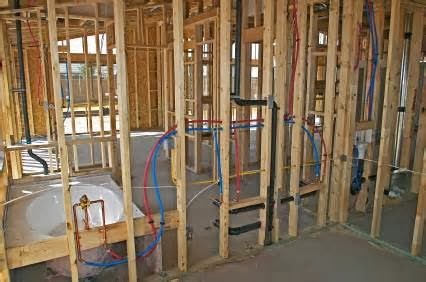
Substantiated rumors are floating around town that builders are using apartment grade plumbing on million dollar homes. But how is the consumer supposed to know about the quality of the pipes being installed behind the walls? When your water lines are decomposing or being eaten by bugs five years down the road its really too late to start questioning the integrity of what your builder is using on your job! And trust me, it happens everyday...


"Specifications don't mean anything in residential construction anymore," groaned one lumberyard vendor recently. Architects may draw it, and structural engineers may specify the materials necessary to make it strong, but some builders are changing lumber grades, product spacing and materials to cheapen costs and improve profit margins. No single construction item is more prone to homeowner deception than lumber. Why? Because ultimately everything is covered up! "Builder are wanting to get through their warranty period (with a homeowner) and that's it - period!" With the abundance of products available to a builder, changing the grading stamp on a ceiling joist, varying the distance between framing members, or even swapping out a specified plywood for OSB (oriented strand board) can make as much as a 10% cost difference in the cost of a framing package. And 10% of the cost of the single largest commodity going in your home can mean thousands of dollars in the builder's pocket!!


On a shorter leash you may not know that the $7,500 allowance your builder gave you for plumbing fixtures needed in your million dollar home will barely do the Master Bath. But you'll figure it out when you go to Ferguson Enterprises to select fixtures for the whole house and spend $25,000! By then the ink will be dry on the contract and it's too late to renegotiate. Can you spell "cost overrun?"

In tight economic times where way too many builders are competing for way too few projects, many believe the name of the game is 'get the contract signed, and make it up on change orders.' Builders feel they can deal with the fallout later. After all, who doesn't build a house understanding that there will be some cost overruns?!!


Recently we were hired to review the specifications for a couple's "dream home" after some problems arose between their builder and the bank. Budgets seemed low, and parts were definitely missing. To be safe we had our guys bid the work. Our estimate was 82% higher than the couple's builder, who, it turns out, had just declared bankruptcy! Forget the dream home, the couple purchased a nice pre-owned and have settled in comfortably.

Sensationalism you say...maybe until it's your project, but then it has a way of becoming all too real.

Disasters such as these can be avoided. Consider these tips before you build or remodel your next home:

  • Build a team of professionals (architect, builder, interior designer, and landscape architect) and empower them with the specific scope of work required. Part of that scope of work needs to be a realistic budget.
  • Challenge the team to not only work with the parameters you've outlined, but also "value engineer" where possible to produce the same product for less money.
  • Demand total accountability and absolute transparency by requiring weekly reports detailing each team member's progress. This type of communication ensures that everyone associated with your project is singing off the same sheet of music.
For more practical tips, pick  up a copy of my book, UnHinged - A Homebuilder's Secrets for Saving Time & Money (Amazon), and my app, BuildCHX (iTunes or Google Play).

Thursday, October 31, 2013

"App-tly Named" BuildCHX(TM)

It's all my daughters' fault. Just about the time I finished publishing my homeowner's helpful hints book UnHINGED - A Homebuilder's Secrets for Saving Time and Money, the girls sat me down one day and said 'Dad, we sure are proud of you for writing a book, but our generation is never going to read it! You must produce an easy to use app which does the same thing.' You've got to be kidding me - after all that work somehow I have to condense the content of the book into a usable building tool for the phone?

SURPRISES are the enemy of all building projects. We wanted to create a transparency for the building process so that homeowners were never left with the two most common jobsite questions, "What happens next," and "What selections do I need to be making?" So we created an app that helps homeowners through the building process.

The new, one-of-a-kind app, BuildCHX allows the user to track the building process through a chronological roadmap of steps necessary to build or remodel a home. Suddenly, magazine clippings are now a thing of the past. The new app also links the building process with idea boards that allow the user to capture and catalog ideas and inspiration for their project.  

I had the idea that it is one thing to catalog ideas, and another to share them. So, I intentionally built the functionality in BuildCHX to share the idea boards with key members of the building team. I call it "TeamShare." Ideas and photos are also linked to Facebook and Twitter for ease of sharing with friends and family.


Ultimately I had the homeowner in mind when designing this app. However, designers, architects and builders, who all manage multiple projects at one time, have also expressed their interest in using the app to help keep their information straight.


As you can imagine, we are excited with the outcome. But what are others saying? Let's follow the early election returns:


 Just paid for the app and made some money! by Roxy Ryan
We are having our house built and are at the beginning of Step4. Upon reviewing previous steps found a tip we had overlooked. We just saved $275! A "must have" if you're building a house and want to stay on top of things.
BuildCHX Review by Cheryl Murff
What a great tool for building or remodeling! This is a must for anyone who wants to glean from a top notch builder!
Homeowner by Jmaddhill
This is a great app if you're building or remodeling a house. Tons of practical steps help you organize the building/remodeling process from A to Z. The ability to easily share product choices among a group (homeowner/decorator/builder) is fantastic part of this app! I highly recommend it! 
The app was published on October 17th and is available in the iTunes Store. An Android version is due out in late November.

Check it out, leave me a comment and/or write a review. We want to know what you think! Still yearning for more? Us too....stay tuned for future enhancements which will make BuildCHX even better!


Friday, May 10, 2013

Reviving the Greek

For twenty-eight years Cozy and Mark Palmer dreamed of having a Greek Revival Farmhouse - now they live in one! The Palmers entrusted Hoebeke Builders, Inc. with helping design and build their dreamhouse. Last week they moved in.


To say the process went well would be an understatement. Mark and Cozy were dream clients! Always ready with a picture, or a video, their desires were communicated very simply and clearly. Right down to the highly polished black handrail on the front stairs.


Before our book, UnHINGED - A Homebuilder's Secrets for Saving Time & Money was...well, UnHinged, the Palmers followed the premise of the book perfectly by building a project team that included: architect Paul Turney, interior designer Rebecca Low, landscape architect Daniel Houchard and his company From The Ground Up, and Hoebeke Builders. Each different discipline performed their work on time, and in concert with the rest of the team. The results are obvious.


It's always great to finish a project and walk away with a new set of best friends! Special thanks from my end to the best business partner a guy could ever have, Phillip McCloud, who dogged the details and made a wonderful home S U P E R B! 

Friday, November 9, 2012

(Editors Note: The following is an excerpt from my new book Raising the Roof! A Homebuilder's Secrets to Saving Time and Money. So often homeowners take a "Ready, Fire, Aim" approach to the building process. Raising the Roof! attempts to re-orient the process so most of the planning occurs upfront, before leaving the architect's office. This piece is a snippet from the section dealing with the third of the team members, the interior designer. 


Sizzle – The Interior Designers
Some interior designers absolutely drip with style and vision for what is truly beautiful, but can’t quite offer the kind of information the contractor needs to actually get the vision built. There’s an enormous difference between seeing and understanding beauty, and knowing how to deliver it to the client.

It should be as simple as following the American Society of Interior Designers or ASID professional designation. Anyone with an ASID behind their name should really know their stuff, right? Unfortunately, that’s not always the case. Just like the AIA (American Institute of Architect) designation behind an architect’s name, all the designation really means is they have advanced schooling in their craft and have interned with another designer before being allowed ot sit for ASID testing.

But ASID doesn’t always buy “taste” or “vision.” In fact, some of the best interior designers aren’t ASID. In the construction industry, when it comes to interior designers it’s apparent that “you either got it, or you don’t.”

All the fancy showrooms down in the Design District of Dallas have a wonderful little sign on their door that says, “To The Trade Only.” The vendors started putting the sign on the front of their shops to try and wave off everyone who thought they knew something about design and wanted wholesale pricing. Years ago the interior design business was “the wild west” before the Design District’s rules concerning showroom accessibility were instituted.

Talent + Information = Success
What a contractor needs most from the design process is talent and information. Interior designers must be able to communicate with the contractor (in plain and simple terms), so surprises are minimized. 

A truly effective interior designer starts his/her work immediately after joining the Project Team. Shortly after the conceptual drawings are released to the owner and the team, an interior designer should start by roughly positioning the client’s furnishings on the plans. Normally, conceptual plans are drawn at 1/8” =  1’ 0”, so it’s hard to properly scale furnishings on plans that size. The inventory of furnishings should come shortly after the interior designer is hired. Surveying what furnishings will and will not be used in the new home or re-model will provide an inventory necessary throughout the job. Without the initial furniture layout on the conceptual plans, it’s conceivable that rooms will be designed that either don’t accommodate furnishings comfortably or at all.
 

Friday, September 28, 2012

Divine Design - The Architects

(Editors Note: The following is an excerpt from my new book Raising the Roof! A Homebuilder's Secrets to Saving Time and Money. So often homeowners take a "Ready, Fire, Aim" approach to the building process. Raising the Roof! attempts to re-orient the process so most of the planning occurs upfront, before leaving the architect's office. This piece is a snippet from the section dealing with the first of the Team Members, the architect. Many additional "tricks and tips" can be gleaned from the balance of the text, but you'll just have to wait for the book to be published before you can see the rest of what we're up to!) 

                                       Divine Design – The Architects


The “Rock Stars” of the entire building process are the architects. Rightfully so – with the lengthy educational requirements necessary before being able to practice, they’ve earned it. But, just because architects have earned rock star status doesn’t mean they have to act like it. Let’s go back to the original thought, “it’s your home, not theirs!” Therefore, architects should adopt an attitude of helpfulness, trying to understand the client’s needs and wants while communicating, educating and taking ideas to the two-dimensional final form known as construction drawings.

Frank Lloyd Wright's "Falling Waters"
On a national level America has several prima donna architects who will invoke “form over function” architectural concepts more suited to their ideas, needs, and tastes. Frank Lloyd Wright, of years ago, is one such person. If living in an art piece was the objective, he was the obvious choice. But “form” doesn’t always lead to the “function” needed in homes to accommodate the needs of a family. Many of Wright’s works are immortalized today for their very avant guard styling, but rarely does one hear about the client that commissioned the work and/or lived in the house.

In the older, more established cities of America, the accepted practice is to hire the architect as the first member of the project team.  Thoughts and ideas the owner has about their home are communicated through a programming process most architects use as a mean of determining the likes and dislikes of the homeowner.  The client’s ability to get what they truly want in a home is directly related to the architect’s ability to de-program, or break the code of what is desired.  Certainly the architect’s ability to correctly interpret the desires of the client, coupled with the creativity to solve unique problems while exhibiting flare in the styling of the home, weigh heavily in the overall outcome of the project.  It works best if large egos are checked at the front door.

Yet, while architects are trained in the art of design and structure, often their communication skills are lacking.  The ability to accurately communicate a design rolling around in the head of the client must be accurately “heard” by the ears of a discerning architect.  This is why clipping pictures and organizing them by areas of the house is so important. Through a two-dimensional set of construction drawings representing the owner’s design objectives, ideas collected from the client’s pictures will finally become three-dimensional on-site when construction begins. Often what the owner really wanted gets lost in the mix because the architect didn’t listen effectively.   As a result, major changes in the overall design of the home follow the framing of the walls.  Once a homeowner can actually walk through their newly framed home, builders will often hear: “…I didn’t know that it was going to look like that!”  But count those concerns as an indictment to the overall process as much as to the lack of communication skills of the architect.  Great houses have to be “drawn” out of the client – it simply requires intense concentration, listening, and communication on the part of both the owner and architect.

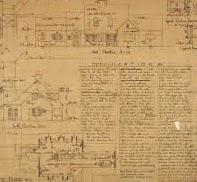
A dimensioned floor plan with exterior elevations of the home represents only the beginning in the production of a set of plans necessary to build a good home.  Often the penny-pinching client will forego purchasing the detail drawings the architect will produce (for a fee) which drive the uniqueness of the overall finished product.  It has been said that ‘the devil is in the details.’  So true.  Extra time and money spent on further definition and explanation set forth in the accompanying architectural details makes the bare bones “house” a “home”.
"Ahhhhhhh...that's not what we asked for!"

Friday, September 14, 2012

Raising the Roof!


(Editors Note: The following is an excerpt from my new book Raising the Roof! A Homebuilder's Secrets to Saving Time and Money. Though the blog took the summer off, the writer of the blog didn't - he was busy writing the book. So often homeowners take a "Ready, Fire, Aim" approach to the building process. Raising the Roof! attempts to re-orient the process so most of the planning occurs upfront, before leaving the architect's office. This piece is an overview of the players necessary for the complete planning of any home or remodel. Hopefully this will be as much fun to read, as it was to write!)
Build a Team

As the owner desiring to have a home built or remodeled, it’s your project so you get to be the quarterback. First, interview prospective team members using the interviewing suggestions below, and hire integrity, character, experience, knowledge, and a “can do” spirit. The team must include an architect, builder/contractor, interior designer (unless you have fabulous taste and proven experience) and a landscape architect. Just a thought or two about the team members:

  • ·      Architects are usually creative people who don’t know, or understand cost. Their discipline is not centered around the cost of materials or labor. They have been trained in design, proportion, balance etc. and bring the aesthetic to the project.

  • ·      Builders know and understand cost. The builder’s discipline has them working in numbers and budgets all day long, but most don’t really know design. Assembling both architect and builder in the same room should give an owner the best of both worlds.

  • ·      Interior Designers usually don’t know schedule. Most often these are creative people (read: artists) who really know color, texture, shape, form, and all of the wonderful components necessary for achieving the “look.” But bringing structure to an interior designer’s world and getting selections when the building process demands, is like herding cats. Though the builder and architect can aid in giving structure to the interior designer, most probably the owner will need to reinforce that the designer is being paid to be timely in their creativity.

  • ·      Landscape Architects design and coordinate all of the outside disciplines and elements necessary for a beautiful yard. This should happen along with the home design and interiors. It’s amazing how much overlap there is between the trades needed to build a home, and the players necessary for creating exterior landscaping. Why not reap the benefits of the cost efficiency of having the concrete guy pour all of the footings, pads, piers, and preliminary flatwork necessary for the yard landscape along with the foundation for the house? Why not have the pool designed, located and formed before home construction gets in the way and makes it really expensive to do later? It requires a little forward thinking, but the savings are dramatic.

·      There’s an argument saying structural engineers, consultants, and lighting designers should be added to the team at the beginning of the process. Too many cooks in the kitchen! The “team” functions much more efficiently with fewer people. Your builder, architect, interior designer, and landscape architect should be the core of your Project Team. They should bring in the other disciplines as necessary to accomplish specific things which may be needed in your home. Good team members also know where competent support professionals can be found. Typically these will be professionals they have worked with before who become valuable additions to the project.

·      Remember this process ends up being a “chemistry experiment.” It’s very important that the owner really likes the people on the Project Team because enormous amounts of time will be spent with this group. Don’t just hire the market reputation of someone because everyone in the community is mesmerized by their work. Upon meeting who the market deems Mr. Wonderful, if there is a personality clash, toss them back in the pond.

Thursday, April 26, 2012

'To Bid, or Not To Bid...'

That is the question. Everyone wants the best deal they can possibly get - I understand that. But maybe the "best deal" doesn't really involve price. Maybe the best deal involves those intangibles like "well built,"  "cleverly value engineered," or "beautifully detailed."


Let me just go ahead and say it: a competitive bid format for project pricing on a residential project is not in the best interests of the client! Here's why. The bid becomes a "story." All bidders wonder what story the client wants to hear - after all, we all want the work! But the story almost always bears little resemblance to what the project ends up costing, or looking like. Why? Because the client lives in the home represented by the story. This isn't a commercial structure we're talking about here that absolutely has to be built for the lowest possible dollar. This is a home that invariably has "creature comforts" that creep back into the building process! Those creature comforts usually cost more that the original bid projections.


Because competitive bidders all want to win the business, sometimes they cut corners to bring their overall budget in under their competition. Clearly this is not in the best interests of either the Architect or the Homeowner! Below are some examples taken from a remodel we currently have under construction - inadequate materials used and then covered up for us to find twenty years after the initial construction. 


No air duct? No Problem! The Builder decided to have the joist space pretend to be the air duct! Ah.. can you spell Code Violation?
'Maybe if I just cut this flooring out I can get enough return air flow!'
Ignored, and undersized structural details cause....
THIS!!
So what is the best way to make sure that you get the best deal possible? Let's let thirty-four years of experience in the building business make some practical suggestions on how to insure you get the most for your money.

  1. Build a Team. It's your home, it's your project, so you get to be the quarterback! Interview and hire integrity, character, experience, knowledge and a "can do" spirit as you define the various disciplines necessary to achieve your goal of building or remodeling your home. For sure you will need an Architect, Contractor, Interior Designer (unless you have fabulous taste!), and maybe even a Landscape Architect.
  2. Demand a Well Coordinated Plan. The best talent in the world, even with the most sterling of intentions won't efficiently design and complete your project without a well coordinated plan! Efficiency is the key - you will save a lot of money by reducing the "fumble factor!"
  3. Facilitate Strong Communications. Information is power and really good information, well communicated, is really powerful! Is there a mechanism in place for strong communication between the various disciplines?
  4. Challenge the Team to Value Engineer. This is where you will really save the money and get your BEST DEAL! Almost always there is a different way to achieve the same look or feel for less money. Experience, coordination, and strong communications among the team will put money back in your pocket!
  5. Express your Gratitude. Team members really respond to a leader who is grateful for their efforts! You catch a whole lot more flys with honey than you do with vinegar!
But there is one other incidental benefit to following the above prescription: YOU WILL REALLY HAVE A GOOD TIME DOING IT!