Showing posts with label Opinion. Show all posts

Saturday, June 6, 2015

The Builder's Beauty Contest


Editors Note: My very talented friend and designer Courtney Price asked me to write this piece for her lifestyle blog, CourtneyPrice.com after hearing of "The Builder's Beauty Contest" from her client who had read my book, Un-HINGED - A Homebuilder's Secrets for Saving Time and Money. I asked if I could borrow it back for inclusion in Build Your Nest. 

The Builder’s Beauty Contest

Thinking about building or remodeling? Don't be fooled by the Builder's Beauty Contest, protect yourself with these tools on www.CourtneyPrice.com

Reality check: Beware of the lowest bid…

For many people, the home is the biggest investment. When building one’s dream home or remodeling an existing house, one can easily get caught in the snare of the numbers game with multiple bids.  Misleading contractors have been known to say or do whatever it takes to get the job, encumbering the homeowner with devastating financial consequences. To discuss this topic and offer guidance, I have invited a highly respected Dallas contractor with a strong moral compass and decades of experience to decode the bidding wars in this special guest post.  Bob Hoebeke is all about communication with his clients; his honesty and transparency have built a solid base of repeat clients with stunning homes. Please welcome Bob:
Do you hear that angry, snarling, gnashing of teeth behind you in the Starbuck’s line while you’re ordering your “quad Venti, no whip, cinnamon dulce latte?” It could very well be the sound of an angry homeowner who has invested inordinate amounts of time, energy and money in building or remodeling their home only to have their dreams shattered through financial mismanagement, deceit, gross incompetence, cover-up or just plain stupidity on the part of their builder. Unfortunately, even for the wealthiest of homeowners, there are no do-overs.
More often than not the scenario described above happens because of the “Builder’s Beauty Contest.” Well-intentioned architects, seeking the best pricing for your home, submit plans to multiple builders. The age-old myth embraced by many is, more bidders means more competition, and more competition means a lower project price. But the reality is substantially different.
planning to build or remodel? read about the  Builders Beauty Contest first on www.CourtneyPrice.com
With stiff competition and the desire to secure the work, each builder will competitively price what they see as the parts and pieces of the project and begin to shape a budget story they believe the architect and owner will want to hear. But there are thousands of pieces to a building or remodeling project. As the builder bids, some pieces will be missed, others will be substituted, many will be camouflaged in other cost centers (site work, landscaping, interior furnishings and after market finishes etc.), and still others will be allowanced with expense caps so low they become meaningless (you can’t buy much of a potty for $50). Builders have to win so many will lie, cheat and even steal for a signed contract. Herein lies the problem.
know what you are getting into before you build or remodel your dream home on www.CourtneyPrice.com
Since final results of a competitive bid bear little resemblance to what actual costs will be when the project is completed, more often than not the awarding of the contract goes to who can tell the best story. Usually the prettiest story wins – it’s The Builder’s Beauty Contest!

 Several ways to help you avoid The Builder’s Beauty Contest:

  • Interviewing multiple builders and hiring integrity and chemistry:
    • On a material to material, and labor to labor basis, there won’t be much difference between builders if they are bidding like quantity, so hire who you like and work together on price.
    • Evaluate a builder’s project administration plan and review cost control mechanisms as well as the builder’s communication skills.
  • Ask for, and check references:
    • Who were the builder’s last five clients and what are they saying about your candidate?
    • How long has the builder employed his trades or subcontractors? Frequent line-up changes often point to instability.
    • Ask for supplier references (lumber, concrete, plumbing, flooring, cabinets, etc.) and find out if he’s paying his bills on time.
  • See some of his work – both finished, and under construction:
    • Are all the parts and pieces there? Do joints fit tightly? Are things well thought out?
    • Do the finishes meet your expectations?
    • Is the job under construction neat, organized, and clean?
  • Smart builders will competitively bid only commodities (lumber,sheetrock, fixtures, etc.) :
    • New, and unfamiliar labor means training and mistakes. A smart builder will not want someone they don’t know “practicing” on your home.
    • Basic safety rules – why take a chance on putting unfamiliar labor in the same home with a client when unsure of the laborer’s past?
Don’t get sold a bill of goods. Let all the poising, primping, and posturing associated with the Builder’s Beauty Contest be saved for someone else’s project. Make a great decision and have yourself some fun as you build the home of your dreams-
-Bob Hoebeke
Unhinged, your manual for remodels or new builds - on www.CourtneyPrice.comOur guest contributor is a published author with a must-read book for anybody who is building or remodeling. The Builder’s Beauty Contest is included in this book but there is so much more. Unhinged is an organizational tool that places you in the center of the process along with your contractor and design team, rather than being managed by your contractor. See more about and order your copy of Unhinged here.
Hoebeke Builders Dallas TX on courtneyprice.com
For the tech savvy- Bob Hoebeke has also created an APP: BuildCHX – check it out if: 1) you plan to build or remodel 2) you are a designer 3) you want to make sense of the giant jigsaw puzzle of the custom construction process 4) you want to keep your new-build or remodel on time and within budget.  BuildCHX offers a linear chronological sequence that will prevent the common delays associated with selections. We all know how costly delays are – this app keeps you a step ahead at all times.
Want more? Bob has a blog… full of sage pointers, observations, advice, a link to project photos- great content.
If you found this article useful, please recommend it and share it with your friends.

Thursday, March 27, 2014

Hot Dogs and Houses

Courtesy FoodnessGracious!
Ordering a hot dog packed with all kinds of good stuff, and building or remodeling your home have at least one thing in common - they are both transactions. But the similarities end there. True, you start with a raw product (either the "dog" or an empty lot) and you add things as desired. But one takes literally seconds to produce, and the other months. Therein lies the difference. Production time raises some interesting issues.

If building a home were as simple as slapping a dog on a bun, squirtin' and spoonin' some great tasting condiments on it and calling it good, friction between parties involved in the transaction would be absolutely minimal. But time has a way of adding emotion, and emotion sometimes fractures relationships. Performance plays a much larger role in building/remodeling than it does at the hot dog stand. So does cost!

Understanding that it takes longer and costs more to build your home than it does to decorate your "dog," here are some tips for surviving the longer transaction period:

  • Building a home is like putting together a gigantic size jigsaw puzzle. It's not just dog, bun, mustard, ketsup etc., it thousands of parts which must be put together in a very specific order. Being highly organized helps! Hiring professionals that are highly organized and have a specific administrative plan for putting those pieces together, will cut down on mistakes and improve efficiency.
  • Do your part! Whether it's deciding if its as simple as ketsup, mustard and/or relish, make your housing selections decisively. Remember, construction is like a "big ball" - if it slows down or stops waiting for you to make a decision, it's very hard to get the ball rolling again.
  • You catch more flies with honey than you do with vinegar. A positive, fun, engaging personality attracts a lot more attention than negativity. Basic human nature says that we would all rather work for someone who is nice and fun than for an 'ole sour puss!
  • "Hold things loosely, and people tightly." A house is a "thing," but the people putting it together have eternal significance. Focusing on the workers and realizing imperfect people make mistakes ensures that value is placed in areas having eternal significance.
We all want what we want. Sometimes getting it requires a little bit more time and effort. Next time you order a "dog" just the way you want it, be grateful it's a simple transaction, easily corrected if it falls on the floor!

Wednesday, February 19, 2014

Gotcha...


The old saying goes, "you don't know what you don't know." So when you're building that home of your dreams, or remodeling the one you love, how do you know what you don't know? It's a fair question. In today's highly competitive housing market how do you know you're getting what you paid for when half the stuff you are paying for is covered up?


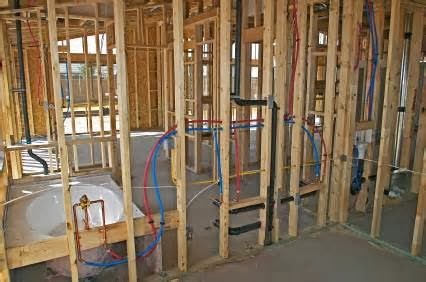
Substantiated rumors are floating around town that builders are using apartment grade plumbing on million dollar homes. But how is the consumer supposed to know about the quality of the pipes being installed behind the walls? When your water lines are decomposing or being eaten by bugs five years down the road its really too late to start questioning the integrity of what your builder is using on your job! And trust me, it happens everyday...


"Specifications don't mean anything in residential construction anymore," groaned one lumberyard vendor recently. Architects may draw it, and structural engineers may specify the materials necessary to make it strong, but some builders are changing lumber grades, product spacing and materials to cheapen costs and improve profit margins. No single construction item is more prone to homeowner deception than lumber. Why? Because ultimately everything is covered up! "Builder are wanting to get through their warranty period (with a homeowner) and that's it - period!" With the abundance of products available to a builder, changing the grading stamp on a ceiling joist, varying the distance between framing members, or even swapping out a specified plywood for OSB (oriented strand board) can make as much as a 10% cost difference in the cost of a framing package. And 10% of the cost of the single largest commodity going in your home can mean thousands of dollars in the builder's pocket!!


On a shorter leash you may not know that the $7,500 allowance your builder gave you for plumbing fixtures needed in your million dollar home will barely do the Master Bath. But you'll figure it out when you go to Ferguson Enterprises to select fixtures for the whole house and spend $25,000! By then the ink will be dry on the contract and it's too late to renegotiate. Can you spell "cost overrun?"

In tight economic times where way too many builders are competing for way too few projects, many believe the name of the game is 'get the contract signed, and make it up on change orders.' Builders feel they can deal with the fallout later. After all, who doesn't build a house understanding that there will be some cost overruns?!!


Recently we were hired to review the specifications for a couple's "dream home" after some problems arose between their builder and the bank. Budgets seemed low, and parts were definitely missing. To be safe we had our guys bid the work. Our estimate was 82% higher than the couple's builder, who, it turns out, had just declared bankruptcy! Forget the dream home, the couple purchased a nice pre-owned and have settled in comfortably.

Sensationalism you say...maybe until it's your project, but then it has a way of becoming all too real.

Disasters such as these can be avoided. Consider these tips before you build or remodel your next home:

  • Build a team of professionals (architect, builder, interior designer, and landscape architect) and empower them with the specific scope of work required. Part of that scope of work needs to be a realistic budget.
  • Challenge the team to not only work with the parameters you've outlined, but also "value engineer" where possible to produce the same product for less money.
  • Demand total accountability and absolute transparency by requiring weekly reports detailing each team member's progress. This type of communication ensures that everyone associated with your project is singing off the same sheet of music.
For more practical tips, pick  up a copy of my book, UnHinged - A Homebuilder's Secrets for Saving Time & Money (Amazon), and my app, BuildCHX (iTunes or Google Play).

Thursday, February 21, 2013

Practice Makes Perfect

It was totally predictable. Just like the waves that crash on the beach of the Monterrey Peninsula, the lure of big profits, and fast easy cash flow has once again washed in a whole new crop of builders! Because Texas has steadfastly refused to implement contractor licensing, anyone can hang out their shingle and start building homes. All it takes is a cell phone and a truck... And everybody in Texas has a cellphone and a truck, right?


With every downturn in the economy we see overextended "homebuilders" finding themselves short on cash, crashing on the rocks, and washing out to sea. All too often the naive homeowner is left holding the bag. But with every wave that washes out, another economic wave swells, and a whole new crop of builders washes into town. Fortunately this happens less in other areas of the country where wannabe contractors have to apprentice two years under an established builder before they can even sit for a highly rigorous licensing test. But not in Texas!


We endorse the idea of injecting new, energetic builder blood into the marketplace. But the lack of regulation governing their training puts the unsuspecting homeowner at risk.


Years ago crops of new builders at least tried to make an effort to learn something about the homebuilding business by taggin' along with the subcontractors and watching, or sometimes even working, with those that have practiced a craft for years. Now we have "cellphone" builders that know nothing of the minutia of building homes -they drive around in their truck all day barking orders at the subs by phone. Sadly it's left up to the subs to try and figure out how to get the houses built. The grand loser? Why the homeowner of course!


What most other states have figured out is that there are thousands of little bitty nuiances to the homebuilding business that need to be learned to protect the homeowner. Ahhhhh...that's called "experience!" Thousands of little 'tricks of the trade' need to be learned before a high quality product can be produced. For example did you know that:

  • The maximum clear span of a 2 x 12 without significant deflection is 18'?
  • Or, that ions of dissimilar metals (two or more) used together most often results in one of the metals eating the other metal? This can happen in just a year or two - not good for water intrusion!
  • Or, that paint and stain rags left in a heap will ignite due to "spontaneous combustion," and fire travels at a rate of 17 feet/second?
  • Or, that compressive strength of a concrete pier depends not only on the strength of the bearing rock, but also on the "skin friction" of the pier walls?
  • Or, that brick is an inhibitor of rain and snow moisture but the porosity of the brick and mortar requires that metal flashings extend all the way through the brick and up the exterior wall?
  • Or, that the standard backset (distance between the edge of the door and the center of the knob) of door hardware is 2 3/8" - not suitable when the doors have 3 1/2" stiles (vertical members) and you are trying to get the knob in the middle of the door.
  • Or, that lacquer and lacquer products are highly flameable and cannot be used around any live electrical source that isn't fully contained? (Read: blow your house up!)
And on...and on...and on... The point is practice makes perfect! Is there really any substitute for experience? How can a guy just starting out in the homebuilding business, that doesn't have the benefit of either an apprenticeship, or rigorous testing, and hasn't done his time in the trenches of experience, qualify to undertake the construction of probably the single largest purchase a family will ever make? Maybe the better question is "would you really want to live in a house built by a guy just cutting his teeth?"

Thursday, January 31, 2013

A Platform to Argue

An armored truck took out the rear quarter panel of my truck a few months back. No one was hurt and the armored truck company quickly referred me to their insurance company to get the damage repaired. "Let the games begin!" After a few months of chasing my tail trying to get the truck fixed, I went back the other day to the armored truck company (couldn't get any satisfaction with the insurance company) and reminded them that this was their problem, not mine, and they needed to send someone over with a rent car to pick up my truck and take it in to have it repaired. No matter that I was stopped at a red light when I got hit, both the armored truck company, and the insurance company made getting it fixed my problem. Today, they brought me my rent car!

This most recent foray into the wonderful world of insurance comes on the heels of no less than three really good insurance fights last year! WHY WON'T THESE PEOPLE DO WHAT THEY ARE SUPPOSED TO DO, AND HONOR THEIR CONTRACT/POLICY?? Simple: Shareholders.


More and more there is talk in this country of a revolution. I'm convinced the revolution most probably will start over insurance and insurance companies. Rampant deception caused by excessively conservative policy interpretation has been inflamed by shareholder greed as they demand greater return on their investments. Who gets squeezed? You and I do! The more policies that are sold, and the more money insurance companies can take in translates to higher profit margins if  the company can weasel you out of benefits. 


Everyone knows that you have to have insurance. But when you buy protection, what do you really have? A platform to argue with the company that sold you the policy. Most likely they won't honor the face value language written in the policy. Congratulations, you've just invested your hard earned money to buy a place at the negotiation table. "Well the policy really doesn't say that, we interpret that phrase to mean this instead!" And on it goes.... If you don't like it, your Big Protective Brother's attitude is 'go ahead and sue me - we've got more money than you do, and we'll bleed you to death.'

Maybe it makes sense to hire an insurance attorney to read every policy before purchase so that all of the loopholes can be exposed. Do you suppose Big Protection will negotiate out the inconsistencies that are discovered? Good luck with that fight!


Tuesday, October 16, 2012

Puzzle Masters - The Builders

(Editors Note: The following is an excerpt from my new book Raising the Roof! A Homebuilder's Secrets to Saving Time and Money. So often homeowners take a "Ready, Fire, Aim" approach to the building process. Raising the Roof! attempts to re-orient the process so most of the planning occurs upfront, before leaving the architect's office. This piece is a snippet from the section dealing with the second of the Team Members, the builder. Many additional "tricks and tips" can be gleaned from the balance of the text, but you'll just have to wait for the book to be published before you can see the rest of what we're up to!) 


Puzzle Masters – The Builders
On one hand you have architects that specialize in design but don’t know cost. The other hand consists of the contractor/builder who doesn’t know design but lives in the world of cost everyday. Sounds like a marriage made in heaven doesn’t it? Wrong. Seemingly architects always want to be on the budget and production committees, and builders want to sneak over to the design committee. The problem? Each is convinced they know more about the other’s discipline. The truth? Architects need only to design – and stay away from cost issues; builders need to specialize in the cost and technique of putting puzzle pieces together, and stay out of the design.

Let’s sort this out. But before we do, let’s clean up the difference between a “builder,” and a “contractor.”  Though the terms seem interchangeable, and will be used interchangeably in this book, a “builder” is someone who builds things and accepts all the normal risks inherent of the building business and also accepts the economic risks of being able to sell, or not sell their product in the marketplace. A “contractor” builds things for clients, still shouldering the normal risks of the building business, but works on a “for hire” basis, thus eliminating  most economic risk. Whew…is all of that clear as mud? If we go way back to the beginning of this book, the builder is the “businessman,” and the contractor is the “artist.”

By the very definition of their job description a builder/contractor has to be in cost and budget everyday. (Note: the title “Contractor” is derived from the word “contract” which everyone knows means lawyers and money must be involved). Whether building for a specific client or the open market, it’s impossible to build something without incurring cost. So, with pricing fresh in their mind, the Contractor is much more likely to know the cost of a pier and beam foundation then the pencil pushing architect.

But ignorance doesn’t stop the architect from guessing. Almost every day in Dallas, Texas you have an architect guessing how much it’s going to cost to build the magnificent structure he/she has just designed. They’re clueless! (Qualifier: unless the firm is “design/build” where architecture and construction both come out of the same office – see the section on Architects). Some of the hardest deals ever done are projects where the client has hired the architect independent of the contractor, designed a magnificent home with the architect, and been told it can be built for say $175 per square foot (exclusive of land). Just imagine the surprise of the client, and the embarrassment to the architect when the project prices out at $300 per square foot. ARCHITECTS DON’T KNOW COST – they think they do, but don’t let ‘em fool ya.

Earlier, in defining the difference between builders and contractors, the rather unusual and precarious risks faced by builders everyday were noted.  Any occupation where people are putting large objects together; standing on walk boards two stories in the air; installing roofing on slopes too steep to possibly walk; and playing with methane gas, to name just a few potential dangers, has inordinate amounts of risk. Assembling the large pieces necessary to build a home requires hanging in mid-air on scaffolding (usually walk boards to the framers), and nailing shingles on a steeply pitched roof while plumbers connect methane gas lines throughout the structure. The chemicals used in painting have yet to even be considered.

A natural argument says builders must be nuts to want to build houses. Some   are – “nuts” about the people, “nuts” about the process, and “nuts” about the finished product. Building gets in the blood and just won’t go away. Sure, risks can be managed through incorporating a business and buying all kinds of insurance but my Father-in-law said it best “…if you’re going to build big houses, you’re going to have big problems.” Truer words have never been spoken.

Builders wish the risks and liabilities were limited to only jobsite related functions. No way - those risks are too manageable. Add economic risks, downturns in the economy, international trade regulation risks, raw product price spikes (copper and gypsum are two prime examples), shortages, client management and relations risks, even the threat of litigation, and it makes one wonder why anybody would sign up for being a builder. (I once had a client that was soooo mad they said their attorney was ‘going to sue me until I bled to death!’)

What’s the incentive in begging for this kind of potential punishment? Where else can a person literally conceive an idea one day, start building on it the next, and end up with something becoming a legacy when long gone? Fourteen months in the oil and gas business years ago filing files taught me about missing the spontaneity of the homebuilding business….. (probably didn’t make near the money, but I’ve had a much better time).


Friday, September 28, 2012

Divine Design - The Architects

(Editors Note: The following is an excerpt from my new book Raising the Roof! A Homebuilder's Secrets to Saving Time and Money. So often homeowners take a "Ready, Fire, Aim" approach to the building process. Raising the Roof! attempts to re-orient the process so most of the planning occurs upfront, before leaving the architect's office. This piece is a snippet from the section dealing with the first of the Team Members, the architect. Many additional "tricks and tips" can be gleaned from the balance of the text, but you'll just have to wait for the book to be published before you can see the rest of what we're up to!) 

                                       Divine Design – The Architects


The “Rock Stars” of the entire building process are the architects. Rightfully so – with the lengthy educational requirements necessary before being able to practice, they’ve earned it. But, just because architects have earned rock star status doesn’t mean they have to act like it. Let’s go back to the original thought, “it’s your home, not theirs!” Therefore, architects should adopt an attitude of helpfulness, trying to understand the client’s needs and wants while communicating, educating and taking ideas to the two-dimensional final form known as construction drawings.

Frank Lloyd Wright's "Falling Waters"
On a national level America has several prima donna architects who will invoke “form over function” architectural concepts more suited to their ideas, needs, and tastes. Frank Lloyd Wright, of years ago, is one such person. If living in an art piece was the objective, he was the obvious choice. But “form” doesn’t always lead to the “function” needed in homes to accommodate the needs of a family. Many of Wright’s works are immortalized today for their very avant guard styling, but rarely does one hear about the client that commissioned the work and/or lived in the house.

In the older, more established cities of America, the accepted practice is to hire the architect as the first member of the project team.  Thoughts and ideas the owner has about their home are communicated through a programming process most architects use as a mean of determining the likes and dislikes of the homeowner.  The client’s ability to get what they truly want in a home is directly related to the architect’s ability to de-program, or break the code of what is desired.  Certainly the architect’s ability to correctly interpret the desires of the client, coupled with the creativity to solve unique problems while exhibiting flare in the styling of the home, weigh heavily in the overall outcome of the project.  It works best if large egos are checked at the front door.

Yet, while architects are trained in the art of design and structure, often their communication skills are lacking.  The ability to accurately communicate a design rolling around in the head of the client must be accurately “heard” by the ears of a discerning architect.  This is why clipping pictures and organizing them by areas of the house is so important. Through a two-dimensional set of construction drawings representing the owner’s design objectives, ideas collected from the client’s pictures will finally become three-dimensional on-site when construction begins. Often what the owner really wanted gets lost in the mix because the architect didn’t listen effectively.   As a result, major changes in the overall design of the home follow the framing of the walls.  Once a homeowner can actually walk through their newly framed home, builders will often hear: “…I didn’t know that it was going to look like that!”  But count those concerns as an indictment to the overall process as much as to the lack of communication skills of the architect.  Great houses have to be “drawn” out of the client – it simply requires intense concentration, listening, and communication on the part of both the owner and architect.

A dimensioned floor plan with exterior elevations of the home represents only the beginning in the production of a set of plans necessary to build a good home.  Often the penny-pinching client will forego purchasing the detail drawings the architect will produce (for a fee) which drive the uniqueness of the overall finished product.  It has been said that ‘the devil is in the details.’  So true.  Extra time and money spent on further definition and explanation set forth in the accompanying architectural details makes the bare bones “house” a “home”.
"Ahhhhhhh...that's not what we asked for!"